Dog breeds

Komondor

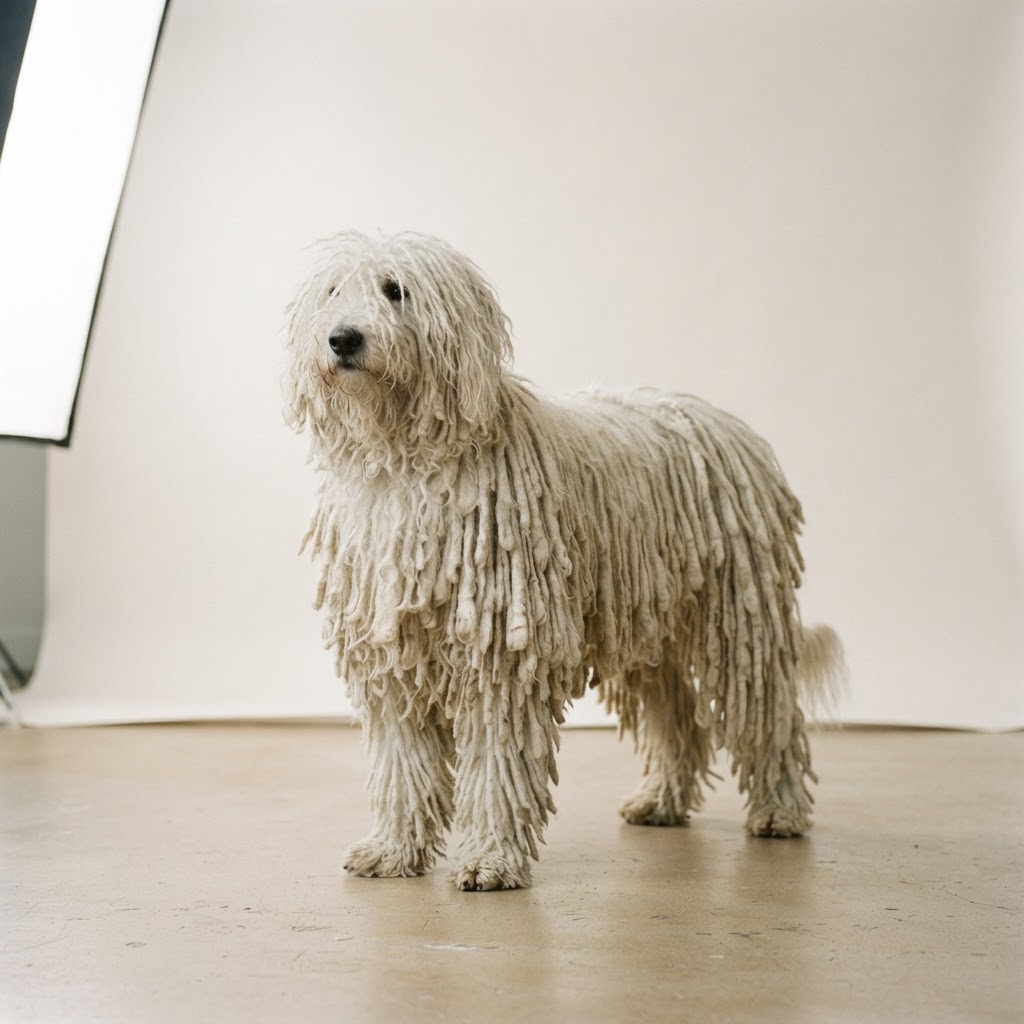
The Komondor is a majestic guardian with a unique corded coat, bred to protect its flock with absolute devotion. At Brego Dog Grooming, we know this extraordinary breed requires specialized grooming and, above all, a conscious and experienced handler.

Book a visit
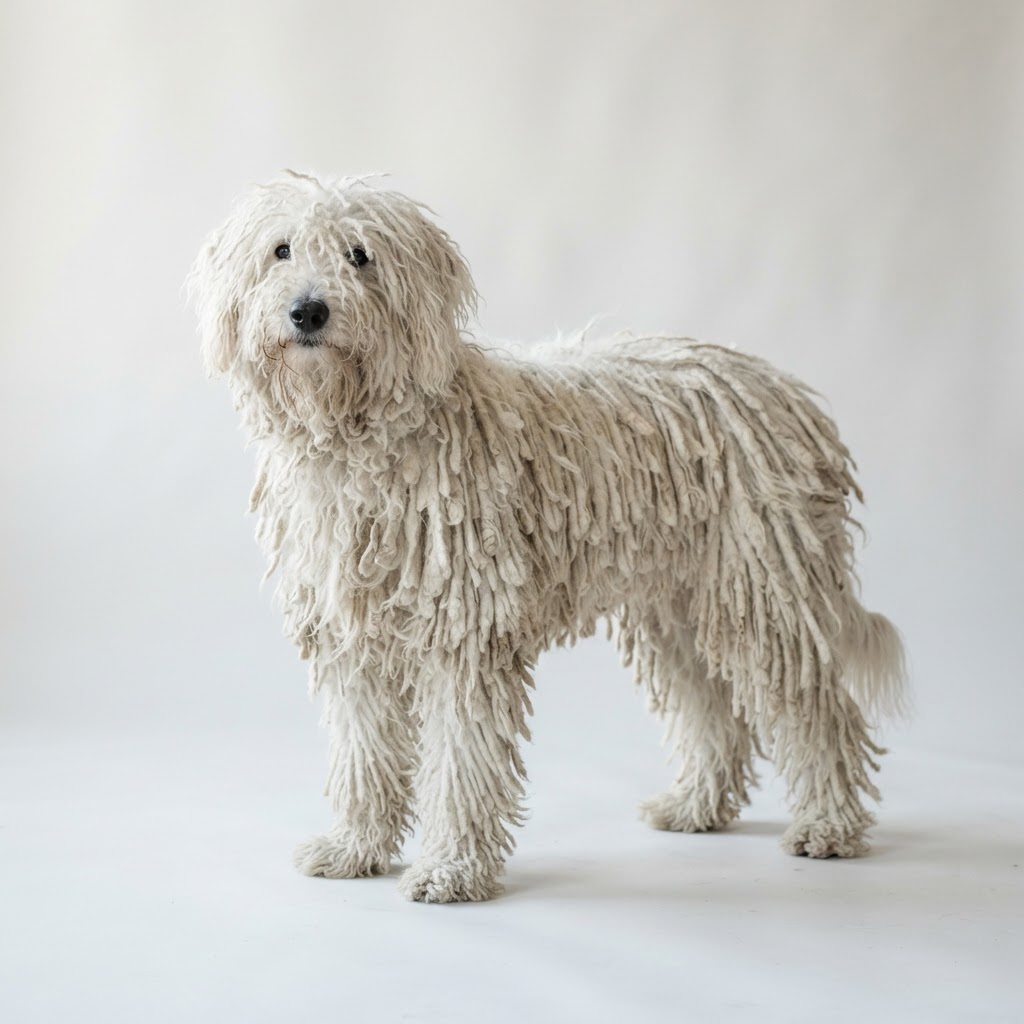
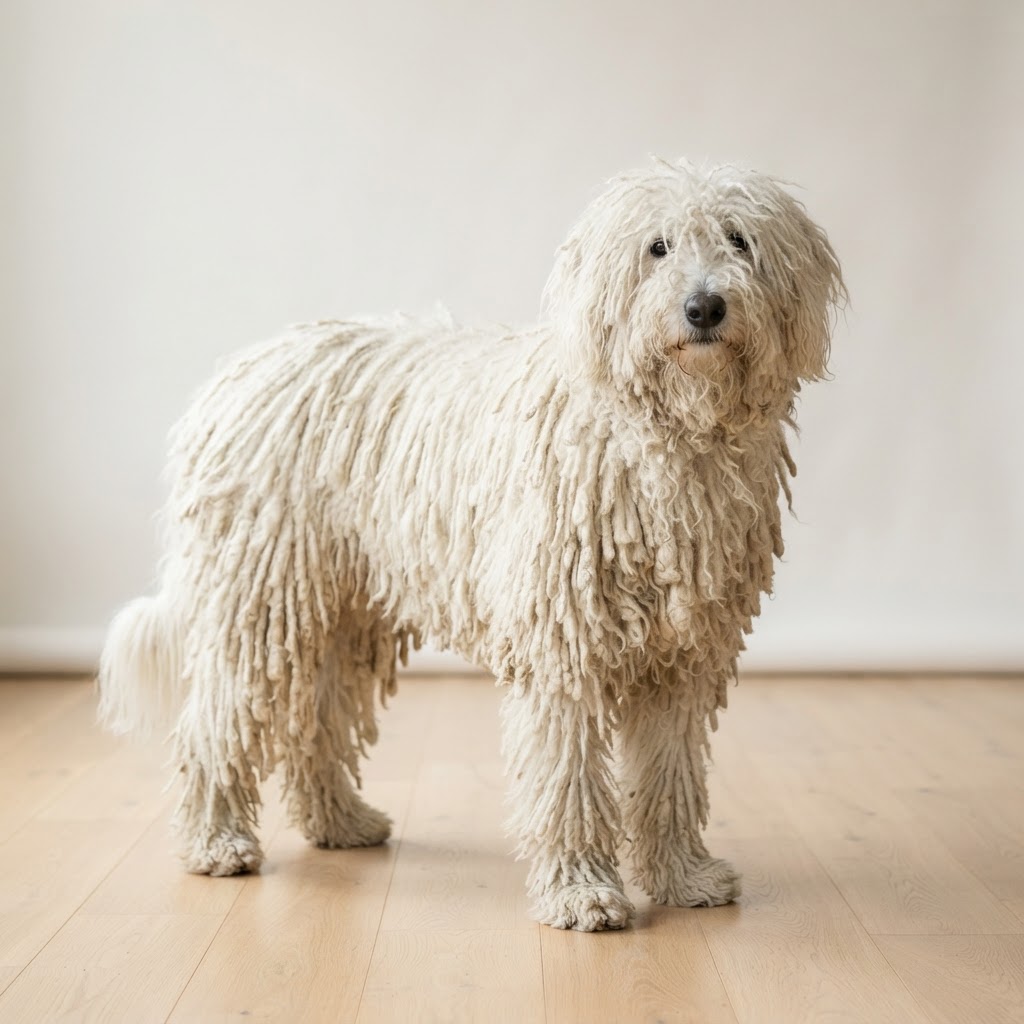
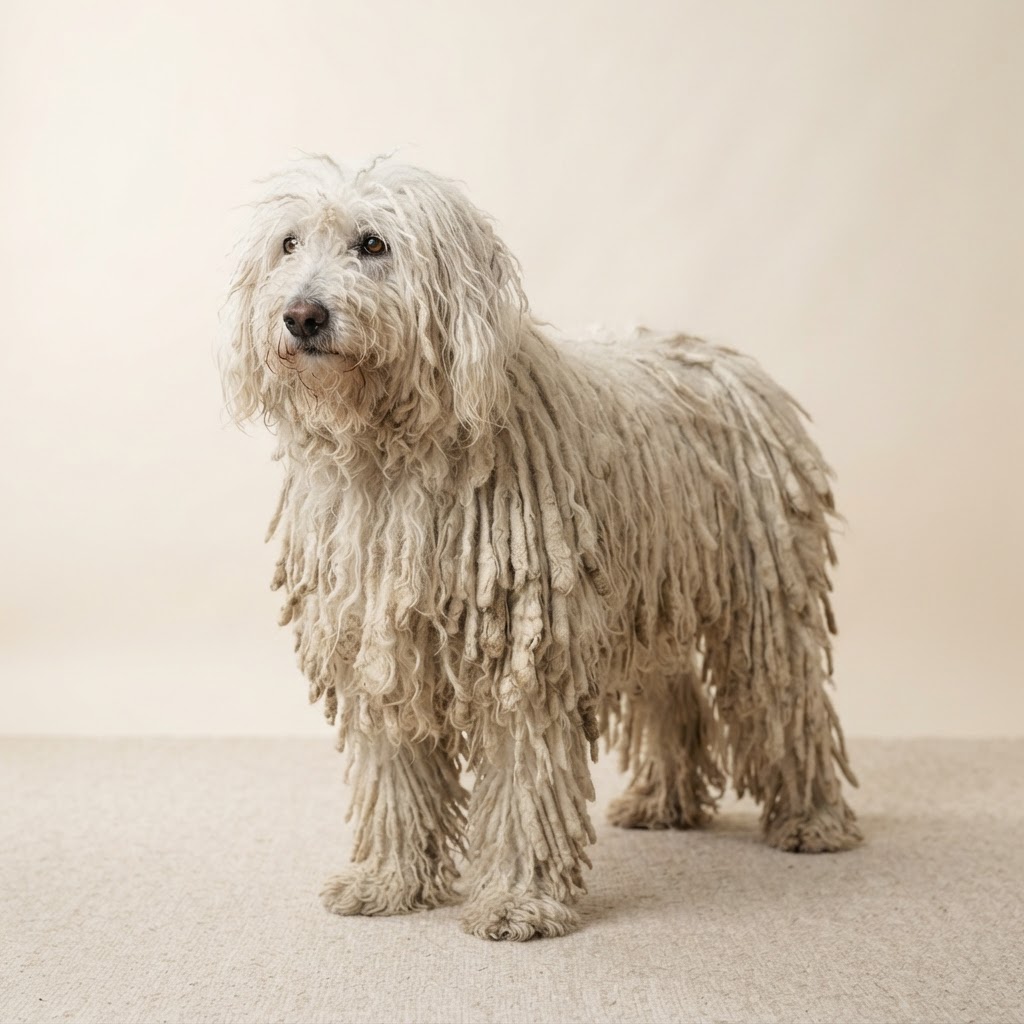
Adult Komondor dog

Quick Breed Facts

Size
Giant
Weight
Komondors are imposing livestock guardian dogs, with weight typically ranging from 40 to 60 kilograms. Males are significantly heavier than females and require firm handling due to their immense physical strength. Such weight means that grooming table work requires heavy-duty professional equipment. We must remember that every kilogram of this mass is a dense, muscular structure built for working in harsh environments.
Height
At the withers, an adult male typically reaches over 70 centimeters, placing this breed among the largest dogs in the world. These dogs look truly majestic, and their height combined with their characteristic coat makes them appear even more imposing. In our salon in Marki, we always check the dog's height to adjust the table lift level. This is crucial to provide the dog with a sense of security during long grooming sessions.
Life expectancy
The average lifespan of a Komondor is about 10-12 years, which is a good result for a breed of such large size. The health of this breed depends largely on a proper diet and avoiding overexertion during the puppy growth period. As groomers, we pay attention to the skin condition under the cords, which has a huge impact on the dog's overall comfort. Regular hygiene is preventive care that helps avoid skin inflammations that could weaken the organism.
Coat
The Komondor's coat is absolutely unique, consisting of a thick undercoat and a coarser guard hair, which together form characteristic cords. This felting process is natural and usually begins around the eighth month of the dog's life. This is not hair that gets brushed in the traditional sense, but a coat that requires skillful cord separation. If the cords become too thick, they can lead to skin irritation, so proper segregation is crucial.
Shedding
Low

Breed Ratings

Energy
Grooming difficulty
Trainability
Family friendly
First-time owners
Shedding
Apartment friendly
Child friendly

Professional grooming tailored to your breed. Book your slot online.

Book a visit

Personality & temperament

The Komondor is a dog with a massive sense of responsibility, treating its home and family as a flock requiring constant protection. It is extremely alert and independent, meaning it makes decisions about when to warn or engage without waiting for an owner's command. In our behavioral work, we emphasize that this is not a dog for everyone, as its strong territorial instinct can be challenging in an urban environment. It values calm and predictability, remaining a loyal but reserved companion. When encountering strangers, the Komondor displays natural suspicion and distance, which stems directly from its genetic makeup. This is a breed that is calm at home, but in the face of a real threat, it can react instantly and with immense power. It does not exhibit the traits of a typical family dog that greets every guest joyfully, but rather observes the situation from a distance. It requires an owner who understands that its silence does not mean a lack of vigilance, but rather full readiness for action. Socialization of a Komondor must be handled thoughtfully from the very first weeks of life so that the dog can distinguish between a threat and normal activity in a grooming salon or on a walk. Towards its family, it is extremely affectionate and protective, forming a strong, unbreakable bond with its guardian. As for other animals, it can coexist with them as long as it has been taught the hierarchy and rules of the group from puppyhood. However, one must remember that its defensive instinct dominates over the need to play with dogs it doesn't know. The Komondor is a breed with an extremely high level of self-confidence, which is often mistaken for stubbornness or a lack of willingness to cooperate. It is a dog sensitive to the tone of voice and the handler's emotions, which is why harsh training methods are completely ruled out. It can quickly sense a handler's uncertainty, which causes it to start taking over the role of leader in situations it finds overwhelming. It requires a partnership-based approach founded on clear rules and mutual respect.

Is this breed right for you?

The ideal owner for a Komondor is an experienced person with a strong character and a dominant personality who understands the independent nature of livestock guardian dogs. This breed requires a consistent but non-aggressive leader who can set clear boundaries without using force. The owner must accept that a Komondor will not perform commands blindly, as they value making independent decisions in critical situations. Such a person should have access to a large space, preferably with a well-secured yard, and be prepared to invest significant time in early socialization. The Komondor fits best in homes with large properties where they can fulfill their natural role as guardians and watchdogs. It is a great choice for people who lead a stable lifestyle and are looking for a loyal, incorruptible protector for their family. This breed gets along well with families who understand the specific needs of large dogs and treat the dog as a full member of the pack while maintaining appropriate hierarchy. If you are looking for a dog for protection sports or guarding duties, the Komondor will be an excellent, albeit challenging, partner.

Who may struggle with this breed

This breed is absolutely not suitable for inexperienced owners looking for their first dog to live in an apartment or a small house. Komondors show strong suspicion toward strangers, which in densely populated areas can lead to serious behavioral problems and neighbor conflicts. This is not a breed for people who value peace and predictability, as the dog always reacts to external stimuli with its natural guardian instinct. Also, owners who do not have time for professional care of the dense corded coat should avoid this breed.

Grooming

Komondor care is not based on daily brushing, but on systematic quality control of the cords. We recommend a professional salon visit at least once a quarter to deeply cleanse the skin and check the coat structure. At home, the owner must devote time to manually separating the cords at the base, which prevents the hair from matting into one large mass. This is work that requires patience and manual precision. The basic schedule includes weekly checks of the ear and eye areas, where hair must be regularly cleared of discharge. Every two weeks, we perform a coat inspection for dirt and small plant debris that easily gets tangled in the cords during walks. At Brego Dog Salon, we keep a detailed record of every Komondor's skin condition to react to any changes in time. Constant contact with a groomer is a guarantee that the dog's coat will remain healthy and breathable. The grooming style for a Komondor is primarily the 'cord separation' technique, performed exclusively by hand. In our salon, we avoid using sharp tools that could cut or damage the hair structure, which is unacceptable for this breed. We focus on working with the natural layout of the coat, ensuring that each cord is clean and breathes freely. This is a holistic approach where the priority is the well-being of the skin underneath. The biggest challenge is maintaining skin cleanliness under the cords, as Komondors often struggle with hard-to-dry areas after bathing. Water trapped inside the cord is an ideal environment for yeast and bacteria, which can lead to an unpleasant odor. We often encounter the problem of tangled twigs or seeds that require surgical precision to remove so as not to ruin the cord. Improper technique can result in the need to shave the dog completely, which we always try to avoid. At home, the owner should primarily ensure that the cords do not join together into large mats of felt. It is worth checking underneath regularly to ensure the skin is dry and free of any redness. On rainy days, it is crucial to use absorbent towels and dry the dog properly, even if it takes a lot of time. If you are not sure how to correctly separate the cords, we invite you to Brego Dog for an instructional lesson. Starting the adventure with a Komondor, from the very first weeks, get your puppy used to being touched on their paws, belly, and ears. The first baths should be short and positive so that the dog does not associate water with stress, which is extremely important for large breeds. Remember that puppy coat is different and will only start forming into cords over time, so do not force the process. The key is building trust with the groomer through regular, short adaptation visits to the salon.
Lifestyle requirements

Living with a Komondor requires adapting your daily routine to the needs of a dog that is extremely territorial. Having a high, solid fence is a necessity because this dog will not back down if it believes its territory is threatened. The owner must work regularly on obedience, using positive reinforcement while maintaining strict rules that must never be broken. The hygiene of this breed is a challenge—you must have time for daily checks of the cords for debris or parasites, which takes a significant amount of time. The Komondor needs regular daily walks but is not the type of dog for long running marathons or intense agility training. They are most mentally drained by tasks related to patrolling the area and observing their surroundings, which is a natural form of activity for them. It is important to provide movement on their own territory, but one must not forget social walks in various environments to avoid excessive territorial aggression. Lack of sufficient activity can result in property damage or excessive barking. Mental stimulation for a Komondor should be based on their instincts, such as tasks involving guarding, territory checks, or scent puzzles. It is worth introducing nosework training, which will help calm the dog down and focus its attention on a specific task in a controlled environment. Boredom is enemy number one, so it is recommended to change walking routes and introduce new elements to daily training sessions. Remember that this is a working dog that requires acknowledgment of its intelligence through challenges, not just mindless repetition of commands.

Guide for new puppy owners

Preparing for a Komondor puppy is primarily about securing the house against its immense curiosity and destructive tendencies. Set up a crate or playpen where the puppy can calm down when emotions get too high. From the first day, start getting it used to being touched in sensitive areas like paws or ears, as later coat care will require the dog to have full trust in your hands. Find an experienced trainer who understands the specifics of guardian breeds even before the puppy arrives home. The first month is the time to build a foundation for a relationship based on calm and authority, not fear. The puppy will test your boundaries, checking how much it can get away with in your pack, so be firm and consistent. In this period, the most important thing is socialization with various sounds, places, and people so the dog learns to distinguish threats from normal street traffic. Be prepared that puppy grooming is constant brushing and care, so dedicate time to it daily to build positive associations.

New owner checklist

  • High, solid property fence
  • Scheduling a professional dog trainer
  • Setting up a quiet space (playpen/kennel crate)
  • Enrolling in puppy classes with an experienced instructor
  • Organizing check-up visits at the veterinarian

Required supplies

  • Brush for detangling thick undercoat
  • Metal comb with long teeth
  • High-quality shampoo for double-coated dogs
  • Solid training leash and a heavy-duty collar
  • Set of scent-work and interactive toys

Common owner mistakes

The most common mistake is trying to 'break' the dog's character with force, which with a Komondor only leads to a loss of trust and escalating aggression. Owners often underestimate early socialization, thinking the dog will handle it on its own as a natural guardian, which leads to uncontrollable aggression toward strangers. Another serious mistake is neglecting cord grooming—if you do not separate the felting strands in a young dog, you will lead to skin inflammation. Many people also forget to teach the 'quiet' command, allowing the dog to bark constantly at every movement behind the fence.

Life stages of the breed

Komondor puppy

Puppy

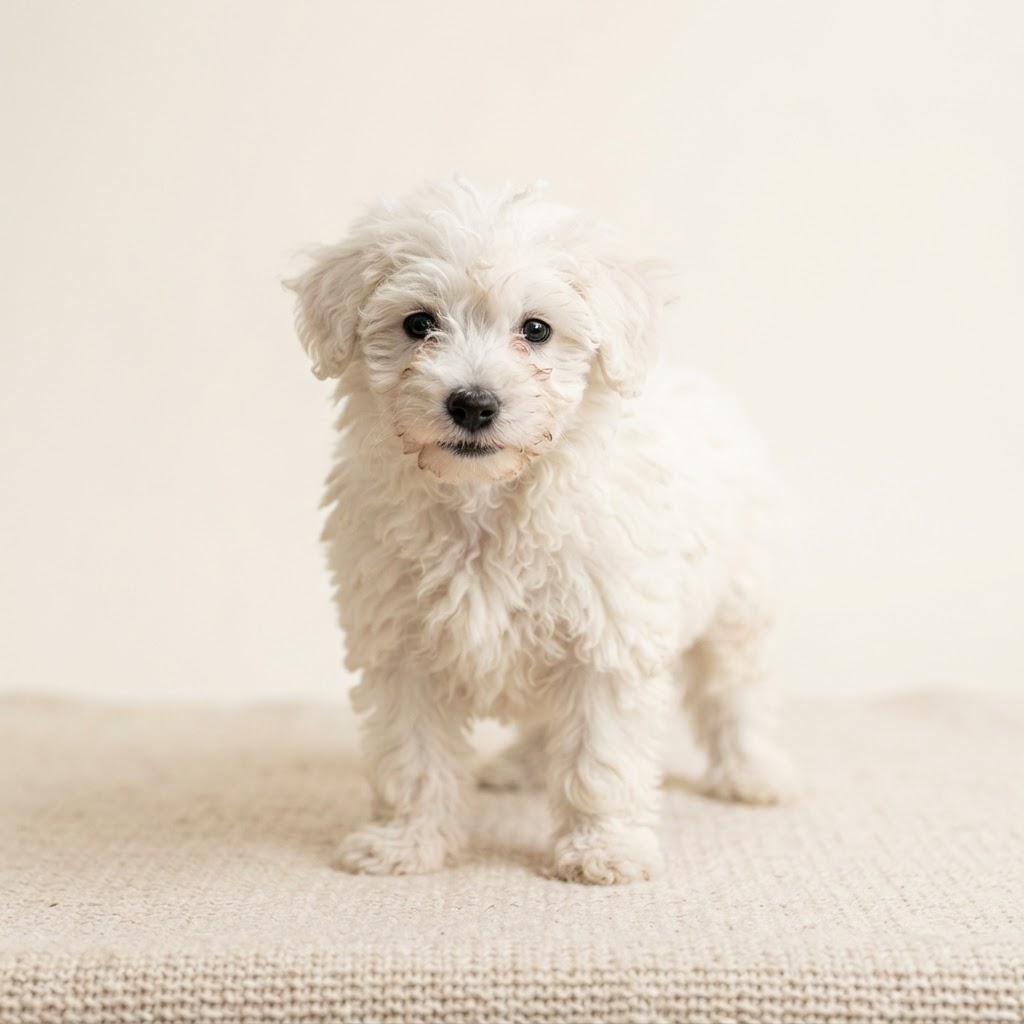
A Komondor puppy has soft, fluffy hair that is just beginning to form the first hair clusters. This is the most important time to get the dog used to being handled in the grooming salon. At this age, we work on the puppy's patience while inspecting the ears and the spaces between the toes. Our goal is to build positive associations with grooming treatments at Brego.

Grooming: Gentle brushing with a soft brush, learning to stand calmly on the table, and habituation to the dryer.

Komondor young dog

Young dog

A young dog goes through the crucial stage of forming the target cords, which often involves the appearance of difficult mats. In the salon, we help owners separate these strands so that one large, painful felt does not form against the skin. This is a time when the coat grows intensively, and the dog begins to be more aware of its strength. Owner education regarding daily hygiene is crucial at this stage.

Grooming: Regular separation of forming cords and checking the skin condition to avoid hot spots.

Komondor adult dog

Adult dog

An adult Komondor has a fully formed, heavy cord that requires professional care at least every few months. At Brego, we focus on deep hygiene and removing debris that embeds into the cord structure during walks. A dog at this age requires respect for its independence, so our visits always take place in a calm atmosphere. We also take care of the condition of the paw pads, which are prone to injury under the weight of the dog.

Grooming: Deep cord cleaning, ear inspection, nail trimming, and paw pad care.

Komondor senior dog

Senior

Seniors require the most gentleness from us, especially when the cords become too heavy for them. We trim the strands to relieve the dog's spine and make it easier for them to move. At our salon in Marki, we provide anti-slip mats for seniors and give them more breaks for rest during sessions. The priority is physical and mental comfort, not a perfect show appearance.

Grooming: Trimming cords to relieve joints, gentle skin care, avoiding stress and prolonged standing.

Popular grooming styles

Natural Corded Coat

This is the traditional look for a Komondor, where the undercoat and guard hairs naturally felt into characteristic cords. As groomers at Brego, we never brush this coat, as it would destroy the felt structure built over years. We focus mainly on separating the cords at the base to ensure airflow to the dog's skin. This style requires immense patience and regular hygiene checks.

Maintenance:Challenging

Hygienic Cord Trim

In our salon in Marki, we often perform cord length corrections, especially around the paws and belly, so the dog does not track too much mud inside. We trim the cords so they do not touch the ground, which significantly helps maintain cleanliness during daily walks. This process requires precise scissors and the skill to guide the cut line so the dog retains its wild appearance. We do not use clippers that could irreversibly damage the hair structure.

Maintenance:Moderate

Sanitary Grooming

For a Komondor, professional cleaning of the anal and genital areas from excess felting hair is crucial. At Brego Dog Grooming, we emphasize that the dog should be able to relieve itself without dirtying its coat. Regularly removing mats in these areas prevents skin infections and unpleasant odors. This is an absolute foundation of preventative care for this breed, even if the dog is not a show dog.

Maintenance:Easy

Najczesciej zadawane pytania

Book a visit for your dog

Professional grooming tailored to your breed. Book your slot online.

Book a visit

We use cookies

We use cookies to improve your experience, analyse site traffic and show personalised ads. You can accept all cookies or manage your preferences.